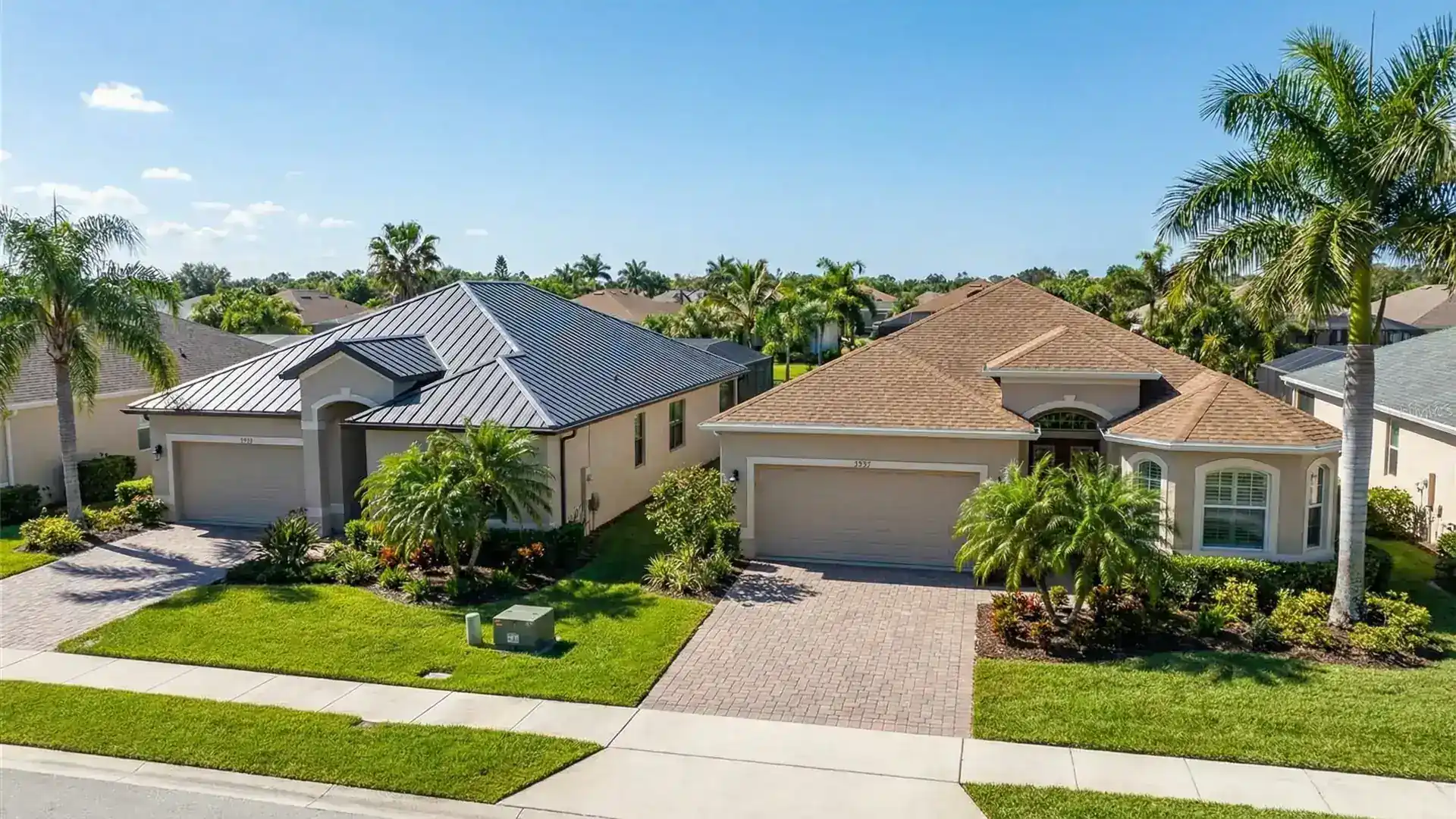
When it is time to replace a roof in Florida, two options come up most often: asphalt shingles and metal roofing. Both are widely used across Lakeland and Central Florida, and both can be the right choice — depending on your priorities, your budget, and how long you plan to stay in the home.
This guide compares the two systems across the factors that matter most to Florida homeowners: cost, lifespan, storm performance, energy efficiency, and insurance implications. For a general overview of replacement costs, see our guide on roof replacement costs in Lakeland.
Upfront Cost
Asphalt shingles cost significantly less to install than metal roofing. For a typical Lakeland-area home, asphalt shingle replacement might run $8,000 to $14,000, while a comparable metal roof installation often runs $18,000 to $35,000 or more depending on the metal system and home size.
That gap is real and matters for homeowners working within a specific budget. But the upfront cost comparison is only part of the picture when one system lasts 40 to 70 years and the other typically lasts 15 to 25 years in Florida conditions.
Lifespan in Florida's Climate
Asphalt shingles in Florida typically last 15 to 25 years. Heat, UV exposure, humidity, algae, and storm cycles all accelerate aging compared to milder climates. A 20-year shingle warranty often reflects performance in ideal conditions, not in subtropical Florida.
Metal roofing commonly lasts 40 to 70 years in Florida when properly installed. It does not absorb moisture, resists algae, and holds up to UV exposure without the granule degradation that limits asphalt shingle life.
Wind and Storm Performance
Florida's hurricane risk makes wind resistance a meaningful factor in roofing decisions. Standing seam metal roofing systems can be rated for winds of 120 mph or higher and use concealed fasteners that eliminate a common point of failure in high-wind events.
Architectural asphalt shingles designed for Florida can carry 130 mph wind ratings, and impact-resistant options exist at the premium end of the shingle market. However, the fastening system and installation quality matter significantly for both materials, and not all shingle installations perform equally under real storm conditions.
Energy Efficiency
Metal roofing reflects solar radiation rather than absorbing it, which can reduce attic temperatures and lower cooling costs during Florida's long, hot summers. This reflectivity is often cited as one of the practical long-term benefits of metal for Florida homeowners who run air conditioning heavily for six or more months per year.
Standard dark asphalt shingles absorb more solar heat. Cool-roof-rated shingles in lighter colors can improve reflectivity somewhat, but they still do not match the thermal performance of a properly installed metal system.
Insurance Considerations
Florida homeowners insurance has become increasingly sensitive to roof age and material. Metal roofs often receive favorable treatment from insurers because of their wind resistance ratings and longevity. Some carriers offer meaningful discounts for metal roofing, and the absence of an aging concern on a metal roof removes a common source of coverage restrictions that affect asphalt shingle roofs after 15 years.
Which Should You Choose?
Asphalt shingles make sense if your budget is limited, you plan to sell the home within 10 to 15 years, or the existing roof still has several years of life and you are doing a targeted roof repair rather than a full replacement.
Metal roofing makes more sense if you plan to stay in the home long-term, want to reduce ongoing maintenance and insurance concerns, and are comfortable with a higher upfront investment that is likely to outlast two or more asphalt shingle replacements over the same period. Get a free quote from Trimm Roofing to compare options for your specific home.
KEY TAKEAWAYS
- Asphalt shingles cost less upfront but typically need replacement after 15 to 25 years in Florida conditions.
- Metal roofing costs more initially but often lasts 40 to 70 years, reflects solar heat, and may improve insurance terms.
- The right choice depends on your budget, how long you plan to stay in the home, and your priorities around storm performance and long-term cost.
SOURCES AND FURTHER READING