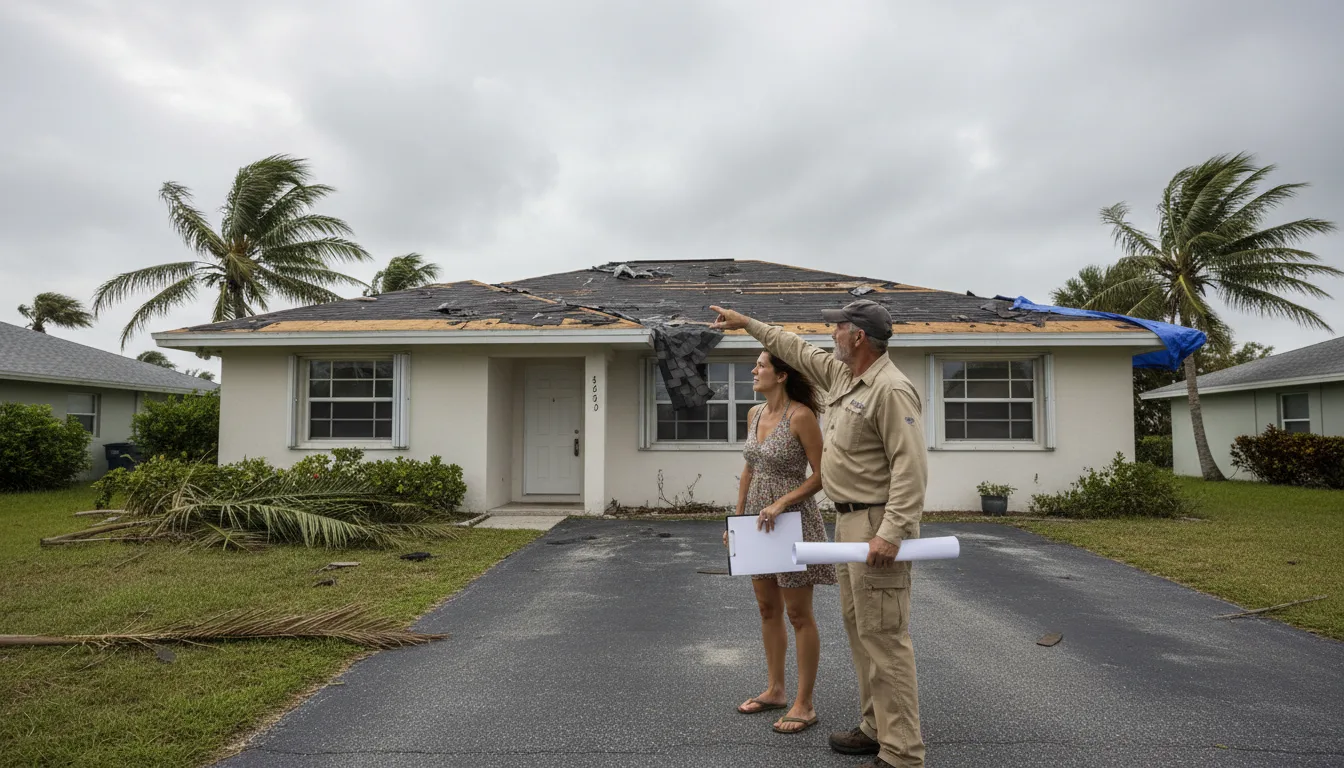
Roof damage from a Florida storm can happen quickly, and the insurance claim process that follows can feel overwhelming if you have never gone through it before. The good news is that the process is manageable when you understand the steps, document carefully, and work with a contractor who can support the process rather than complicate it.
This guide walks through the practical steps for filing a roof insurance claim in Florida, from the moment damage occurs to final resolution. If you need help documenting damage right after a storm, see our article on what to document after roof storm damage in Florida.
Step 1: Document the Damage Before Touching Anything
As soon as it is safe to do so after a storm, photograph and video the damage from the ground and any safe vantage points. Capture as much detail as possible: missing shingles, displaced flashing, debris impact points, water intrusion locations inside the home, and any structural changes visible from outside.
Do not allow tarping, cleanup, or any repair work to begin until you have thorough documentation of the original damage. Changes made before documentation can complicate claims.
Step 2: Review Your Policy Before Filing
Before calling your insurer, review your homeowner's policy for the key details that will affect your claim: your deductible amount, whether you have replacement cost value (RCV) or actual cash value (ACV) coverage, and whether your policy includes a separate wind or hurricane deductible.
Florida policies often have a separate deductible for hurricane-related damage that is calculated as a percentage of the home's insured value rather than a flat dollar amount. Knowing this ahead of your call prevents surprises.
Step 3: File Your Claim Promptly
Contact your insurance company to report the damage as soon as possible. Florida insurance policies typically have reporting requirements that can affect your claim if delays are unreasonable. When you file, get a claim number and the name of the adjuster assigned to your case.
Ask about the timeline for an adjuster visit and whether there are any steps you should take or avoid in the interim.
Step 4: Get a Contractor Inspection Before the Adjuster Arrives
Having a licensed roofing contractor complete a professional roof inspection before the insurance adjuster arrives gives you an independent assessment of what actually needs repair or replacement. This is not about disputing the adjuster — it is about being informed and having professional documentation to compare with the adjuster's findings.
A good roofing contractor will document the damage with photos, identify items that need to be replaced versus repaired, and can be available to walk through the damage with the adjuster if needed.
Step 5: Be Present During the Adjuster Visit
If possible, be home when the insurance adjuster inspects the property, and invite your roofing contractor to be present as well. This allows any questions about specific damage to be addressed on the spot, and ensures the adjuster has access to the full scope of what was affected.
Step 6: Review the Estimate Carefully
When the insurance estimate arrives, compare it to the contractor's assessment. If there are significant differences — items the adjuster did not include, depreciation calculations that seem off, or a scope that seems incomplete — you have the right to ask for a re-inspection or submit a supplemental claim with additional documentation.
A reputable roofing contractor experienced with insurance work can help you understand whether the insurance estimate is sufficient to complete the work described.
Watch Out for Storm Chasers
After major Florida storms, unlicensed or out-of-state contractors often move through affected areas soliciting work. Be cautious of any contractor that appears unsolicited, pressures you to sign paperwork immediately, asks you to sign an assignment of benefits (AOB), or cannot provide a valid Florida contractor license number.
Working with a local, established, licensed roofing contractor protects you from fraud and ensures accountability long after the work is completed. If you need immediate help after a storm, Trimm Roofing provides emergency roof repair and storm damage repair for Lakeland and Central Florida homeowners.
KEY TAKEAWAYS
- Document damage thoroughly before any cleanup or repairs begin — photos and video are critical for a successful claim.
- Having a licensed roofing contractor inspect the damage before the adjuster arrives gives you an independent professional assessment.
- Be cautious of unsolicited contractors after storms, and always verify a Florida contractor license before signing any agreement.
SOURCES AND FURTHER READING